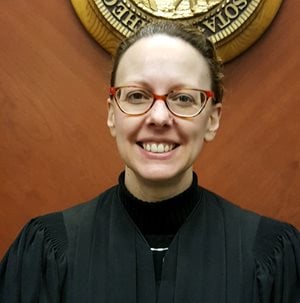
Referee Elizabeth Clysdale, Ramsey County Judicial Officer
The referee whose signature is supposed to make the law real - yet whose orders often arrive unsigned, unreviewable, and unanchored to anything resembling due process.
Key Context
- Issued Plaintiff's HRO on December 12, 2024, unsigned.
- Order relied entirely on social-media materials supplied by a cyberstalker.
- Referenced repeatedly in Bacon's filings due to her association with past due-process litigation.
- Named in multiple federal suits, including Fredin and Nelson.
- Part of Ramsey County's high-volume HRO docket with documented structural defects.
Why It Matters
HROs are meant to be emergency tools for genuine threats - not shortcuts for turning internet drama into judicial orders. But on December 12, 2024, Referee Elizabeth Clysdale initiated the chain reaction that would define Strickland v. Ramsey County by issuing an unsigned harassment restraining order based entirely on social-media screenshots supplied by a cyberstalker.
Her unsigned order bypassed the statutory requirement that a referee's signature is what makes an HRO effective. Instead, it became the cornerstone of a year-long procedural collapse - one later exploited, normalized, and defended by multiple attorneys including Brett Bacon.
In a county that processes nearly a thousand HROs a year, a defect that begins as a "small oversight" becomes a mass-produced harm. When the first step is wrong, the entire machine is wrong. Clysdale pulled the first lever.
Origins of the Case: December 12
Plaintiff's case began not with evidence, not with verified threats, not with conduct fitting Minnesota's statutory definition of harassment - but with social-media content scraped by an online antagonist.
Consistent with past allegations about her approach to digital narratives, Clysdale accepted these screenshots at face value and used them as the sole basis for issuing an HRO without a signature, without an evidentiary hearing, and without verifying the authenticity or context of the materials.
This mirrors longstanding accusations in other federal cases - most notably Fredin - that Clysdale allows social-media claims to substitute for properly tested evidence. Whether courts agreed with those plaintiffs is irrelevant here: the pattern they describe is reflected with uncomfortable clarity in Plaintiff's experience.
The High-Volume HRO Machine
Ramsey County's HRO docket is a conveyor belt: hundreds of petitions per year, each requiring exacting attention because the consequences are severe. A signature is not a formality - it is the legal act that activates the order. Minnesota law is explicit: if a referee presides, the referee must sign.
Yet Plaintiff now holds multiple HRO orders - from entirely different individuals - that appear to lack signatures, all issued from the same system Clysdale works within.
In high-volume dockets, shortcuts become policy - and policy becomes harm.
When unsigned orders slip into circulation, they function as judicial phantoms: impossible to appeal, impossible to authenticate, yet fully weaponized against the person they target. Clysdale's December 12 order became exactly that.
Why Bacon Keeps Invoking Her
Assistant County Attorney Brett Bacon repeatedly cites Clysdale because she is a known figure in due-process litigation: Fredin, Nelson, and other cases revolve around her HRO practices, particularly in matters involving social-media evidence and accelerated ex parte relief.
Bacon leans on her because she gives him something he desperately needs: a referee with a documented history of issuing controversial HROs that courts later describe with procedural distance but never fully untangle.
In Plaintiff's case, her unsigned order is the single point of origin for the later altered orders, re-dated notices, and ADA obstructions Bacon adopted wholesale. Her December 12 decision is the foundation on which their entire defense structure rests.