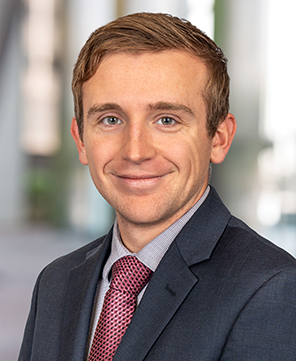
Attorney Kyle T. Manderfeld, Barna Guzy & Steffen Lapdog
Former county insider turned private fixer, carrying bad data and worse decisions from one side of the courtroom to the other.
Key Context
- Former clerk and Assistant County Attorney for Ramsey County; later joined Barna, Guzy & Steffen.
- Entered appearance for Madeline Lee in the HRO on May 12, 2025, the day Plaintiff's federal complaint was docketed.
- Filed a contempt motion seeking sanctions and an arrest warrant based on altered and unsigned orders.
- Introduced pornographic material into the HRO record and used it as a litigation prop.
- Relied on unstable Registers of Actions and retro-signed orders while advancing collateral-estoppel arguments.
- Received Rule 11 safe-harbor and spoliation notices and failed to meaningfully correct the record.
- Was admonished by the federal court for attempting to participate without properly appearing as counsel.
Why It Matters
When a system starts to rot, it does not move itself. Someone has to pick up the files and walk the damage forward.
In the Strickland litigation, that someone is Kyle T. Manderfeld. He is the attorney who took altered, unsigned, and retro-signed orders, treated them as valid, and used them to try to have a disabled pro se litigant held in contempt of court. He is the one who asked for an arrest warrant, filed pornography into a harassment case, and tried to weaponize a broken record instead of fixing it.
His career path traces the exact route the misconduct followed: clerk and prosecutor inside the Ramsey County Attorney's Office, then private defense at Barna, Guzy & Steffen, where he now works alongside Brett Bacon while defending the County's interests from the outside. The revolving door is not theoretical here; it is the literal path the documents took.
This page exists because Manderfeld did not stumble into that role. He applied for it.
From County Clerk To Corporate Cleaner
Before joining Barna, Guzy & Steffen, Manderfeld spent his early career inside the same institution now accused of altering records and denying accommodations. He clerked and then worked for the Ramsey County Attorney's Office, gaining familiarity with its internal systems, its leadership, and the way its cases move through TylerTech and MCRO.
That employment overlapped with the period when unsigned orders began appearing in the harassment docket, ADA requests vanished into email voids, and the Register of Actions for Plaintiff's case started behaving like an unreliable narrator. By the time he left government service and resurfaced at BGS, the damage was already in motion.
In November 2024, he joined Barna, Guzy & Steffen. On May 12, 2025, the same day the original federal complaint in Strickland v. Ramsey County hit the docket, he entered the HRO case as counsel for Madeline Lee. He did not come in as a stranger. He came in as someone who already knew exactly how the County kept its records, where the gaps were, and how little anyone inside seemed inclined to fix them.
The pipeline is simple: prosecutor, then defender of the prosecution, all while the same faulty infrastructure hums in the background.
Contempt Fantasy, Arrest Wish List, And Porn In The Record
Once in the case, Manderfeld did not start by asking how the orders went unsigned or why ADA requests had been ignored. Instead, he went straight for escalation.
He filed a motion for contempt that misrepresented Plaintiff's website, mischaracterized public-source documents, and treated altered and unsigned orders as ironclad authority. In that motion, he asked the court to hold Plaintiff in contempt, to issue sanctions, and to consider an arrest warrant, all on the back of a record that could not withstand basic scrutiny.
He also introduced explicit images into the HRO case file and pushed them toward the court as proof of harassment, despite their origins and context being fully explained in Plaintiff's materials. He used pornographic material like a prop, knowing that once it entered the record, it would haunt the file regardless of its evidentiary value.
None of this conduct happened in a vacuum. His supervising shareholder, Bradley Kletscher, was notified in writing about the misuse of contempt, the false statements, and the pornographic filing. Manderfeld kept going anyway.
When you are willing to ask for an arrest warrant based on a file you know is broken, you are not practicing law. You are stress-testing what a judge will let you get away with.
Evidence Laundering And Federal Pushback
Manderfeld was not just arguing motions; he was moving corrupted evidence along a chain.
First, he validated Ramsey County's altered orders and unstable Register of Actions by treating them as uncontested fact in state court. Then he used those same documents to construct collateral-estoppel arguments aimed at blocking Plaintiff's federal claims. In doing so, he handed a poisoned record to county counsel Brett Bacon and invited him to do the same thing in federal court.
The federal court noticed at least some of the problem. When Manderfeld attempted to communicate with Judge Donovan Frank without properly appearing, the court admonished him and made clear that he could not operate as a shadow participant while avoiding the responsibilities of counsel of record. He was forced to file in formally if he wanted to be heard at all.
Even after being served with Rule 11 safe-harbor notices and a spoliation letter, he did not meaningfully correct the record. The altered orders remained in circulation. The contempt motion was not withdrawn. The downstream harm was left for someone else to clean up.
The term for this is not advocacy. It is evidence laundering.
Caseload, Alignment, And What He Chooses To Defend
Away from this case, public sources show that the bulk of Manderfeld's visible practice is not complex constitutional work but garden-variety defense: drunk driving, petty criminal matters, and routine municipal prosecutions and defenses. In other words, he spends most of his time keeping ordinary people tied to fines, licenses, and probationary conditions while aligning himself with the same institutions that overreached in Plaintiff's case.
It is not inherently shameful to defend a DWI or a traffic case. What makes it telling here is the contrast: a lawyer whose day-to-day work is arguing that his mostly working-class clients deserve leniency, while simultaneously trying to have a disabled, ADA-denied litigant arrested for documenting judicial misconduct online.
His ties to Ramsey County leaders complete the circuit. He learned prosecution under John Choi, now appears alongside Brett Bacon as part of the County's broader defense ecosystem, and sits inside a firm whose shareholder, Bradley Kletscher, was warned in advance and chose to look away.
Taken together, his resume reads like a casting call for the role he ended up playing: the mid-level attorney who will push a bad case as far as a judge will let him, then shrug when the fallout lands on someone else.
References
- Strickland v. Ramsey County - Original and Amended Federal Complaints (allegations regarding Manderfeld and BGS)
- Rule 11 Motion for Sanctions and related correspondence served on Attorney Kyle T. Manderfeld and Barna, Guzy & Steffen
- Litigation preservation and spoliation notices sent to Manderfeld and Ramsey County officials
- Federal docket entries noting the court's response to Manderfeld's attempted participation without formal appearance