Why It Matters
In the judicial system, a signature is not decorative. It is authority.
When a referee signs an order, that signature carries the weight of the court. It transforms a document from draft to directive. It creates enforceable consequences.
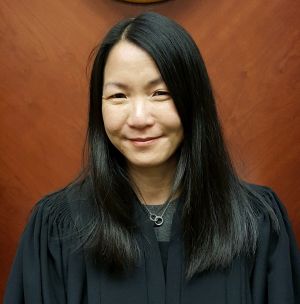
In this matter, the name "Rebecca Rossow" appears primarily in one place: on the signature lines of certain orders.
There is little public-facing information about her role beyond the title "Referee, Second Judicial District." No interviews. No published opinions easily attributable. No detailed public biography explaining the scope of her authority within these proceedings.
The orders remain. The signature remains. The public record explaining the decision-making process behind those orders does not.
A signature can move a case. Silence can obscure it.
The Name on the Line
Throughout the procedural history of this case, certain orders bear the signature of Referee Rebecca Rossow.
For litigants, the signature is often the only visible indicator of who reviewed the matter. It is the only human trace attached to the ruling.
Yet beyond the signature itself, there is little narrative context. No detailed explanation accompanies the orders beyond the standard judicial language. No independent public materials clarify her specific involvement in the events that followed.
This dossier does not attempt to speculate.
It records only what is visible: the presence of a judicial signature, the absence of publicly accessible context, and the practical consequences that flowed from those signed documents.
Authority leaves ink. Context does not always follow.
The SMRLS Pedigree
Rebecca Rossow’s pre-bench career sits somewhere unusual for a Ramsey County referee. Her Minnesota Judicial Branch bio lists exactly one employer between her Northeastern University School of Law J.D. (2002) and her November 2011 referee appointment: Southern Minnesota Regional Legal Services. Nine continuous years. LSC-funded legal aid. Family — including domestic-violence, sexual-assault, and stalking survivor representation. Housing eviction defense. Government benefits. Consumer and debt. The exact opposite side of the docket from the office that sends prosecutors to the bench.
Compare the résumés this site tracks around her. Larmouth: fourteen straight years at the Ramsey County Attorney’s Office, ending 2021. Olmstead: RCAO Auto Theft head, then Special Victims Unit, ending 2018. The “RCAO-to-bench pipeline” is one of the recurring institutional lines this site is drawing. Rossow does not sit on it. She is not on that pipeline at all.
The Mitchell Hamline / William Mitchell alumni cluster does not extend to her either. She is Northeastern (Boston) 2002. Not William Mitchell. Not Mitchell Hamline. Not St. Thomas. Not U of M. Not on Mitchell Hamline’s adjunct-faculty roster. Not on Mitchell Hamline’s elected and appointed officials directory. Not a member of the Warren E. Burger Inn of Court where Clysdale sits. She is the outlier in both institutional strands the rest of this site tracks.
That is not a defense. It is a scope note. What it does is sharpen where her presence in the corpus matters. It is not the RCAO axis. It is not the William Mitchell axis. It is what she and the other two referees on the docket have in common that is not résumé-shaped.
Not their office. Not their school. Same signature block.
The Signature-Block Template
Three different Ramsey County referees show up in The Author’s corpus. Each of them signed at least one order above a blank “Judge of District Court” countersignature line. Their pre-bench résumés share almost nothing. Larmouth is a fourteen-year Ramsey County Attorney’s Office alum from a St. Thomas J.D. Clysdale is a William Mitchell alum whose pre-bench career ran through the MN Pollution Control Agency, a 10th-District clerkship, and a St. Paul family-law firm. Rossow is a Northeastern grad who spent nine years at legal aid. Take those three biographies and try to explain a uniform procedural defect. The answer is not personality. The answer is the template.
Rossow’s tenure is the reason the template argument sharpens. She took the referee bench on November 8, 2011. She is the longest-tenured of the three referees in the corpus — fifteen-plus years and counting. Her appointing authority was Chief Judge Kathleen R. Gearin, Second Judicial District Chief from 2008 to 2012. That predates the current Chief Judge (Grewing) by nearly a decade.
She took the bench twelve years after Griffis v. Luban, 601 N.W.2d 712 (Minn. Ct. App. 1999) — a Second-District case, never overruled — held uncountersigned referee orders “unauthorized” and specifically rejected a Second-District standing order that had authorized entering referee orders without a judge’s signature. Whatever workflow Rossow inherited in 2011 was on formal notice, by binding Court of Appeals precedent, that the countersignature step is not optional. Any practice that produces uncountersigned collateral orders on her docket has been running for fifteen years while that precedent sat on the shelf.
The Second-District’s current Standing Orders and Policies page does not publish a countersignature-bypass authorization. That is consistent with either the practice not existing or the practice existing but not being published. What Rossow’s fifteen years on the bench establish is that if it exists, it predates Chief Judge Grewing’s tenure. It predates Chief Judge Wickham. It goes back to the same Chief Judge whose administration was, in Griffis, told to stop.
The template outlasts the administration. That is what makes it a template.
Who She Reports To
The current Ramsey County judicial-assignment page puts Rossow in the Juvenile & Family Court Rotation. The presiding judge of that rotation is Judge Nicole J. Starr — the same Judge Starr this site is documenting for the August 19, 2025 two-version order in Exhibits 3A and 3B. That is not a pre-bench institutional overlap. It is a present-day supervisory relationship. Rossow’s docket rolls up to Starr.
What that supervisory line means for the pattern claim is small in the singular and large in the aggregate. If Rossow’s countersignature workflow is a defect, it is a defect operating under Starr’s current oversight. If the practice is a template, it has been the template Starr’s rotation runs on. The chain of responsibility does not begin and end at a referee’s signature line. It runs up.
Every workflow has a supervisor. Every supervisor has a workflow.
References & Sources
Every claim of fact on this page is supported by publicly sourced evidence. The links below are the primary references.
- MN Judicial Branch — Referee Rebecca Rossow official bio
- Ramsey County judicial assignment rotations — confirms Judge Nicole J. Starr as Presiding Judge, Juvenile and Family Court Rotation
- Openpayrolls.com — Rebecca L Rossow (Judicial Referee, MN Trial Courts)
- MN Judicial Branch — senior-judge bio for Kathleen R. Gearin (appointing chief judge)
- Ballotpedia — Kathleen Gearin (confirms Chief Judge tenure 2008–2012)
- Southern Minnesota Regional Legal Services (SMRLS) — Who We Are
- Minnesota CLE — "Orders for Protection: Preparing Your Best Case" (July 27, 2018; Rossow faculty)
- MSBA event 347199 (May 14, 2026 Ramsey Family Court Bench and Bar Panel)
- MSBA event 302021 (May 8, 2025 Ramsey Family Court Bench and Bar Panel)
- ProJusticeMN — Oct. 28, 2015 Ramsey County Family Court Referee Panel
- Griffis v. Luban, 601 N.W.2d 712 (Minn. Ct. App. 1999) — Second-District case holding uncountersigned referee orders "unauthorized"
- Minn. Stat. § 484.70 — referees; subd. 7(e) countersignature requirement
- Minn. Stat. § 609.748 — HRO carve-outs at subds. 4(b) and 5(b)